
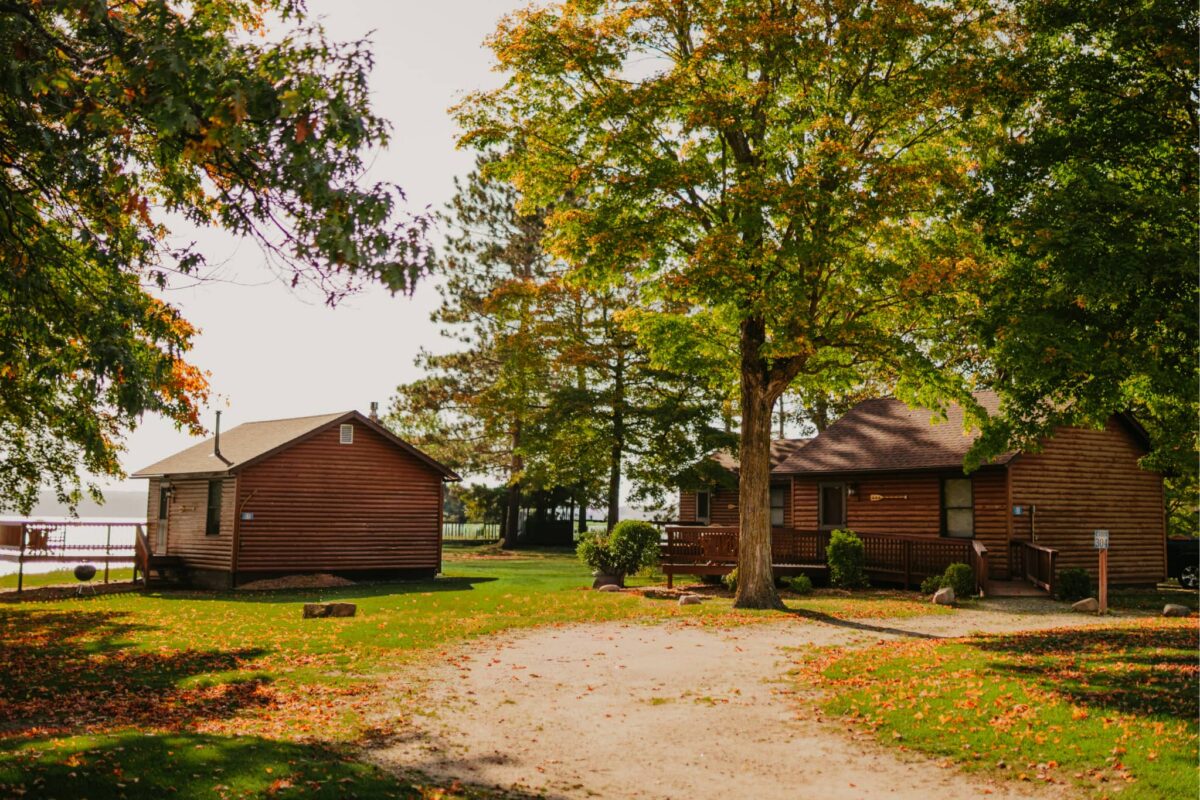
October has its own kind of beauty. The air cools and the colors warm. The treeline shifts to gold and rust where green used to be, and something in the air asks you to slow down and take stock.
Trees don’t mourn the leaves. They release them deliberately, conserving what they need for what comes next. It’s not loss. It’s readiness.
Also, trees do not hold meetings about it.
Leaders could learn something from this. Not in a metaphor-on-a-poster kind of way, but in the plainest sense. Autumn is a useful time to look at what you’re still carrying that stopped serving you a while ago.
Specifically, how you communicate. The habits that once made sense but have calcified into something that drains more than it gives.
What You’ve Been Holding On To
Most failing communication looks, from the inside, like it’s working fine.
The problems show up sideways. Meetings where no one says anything real. Decisions that have to be revisited three times. The communication breakdowns live in the gap between what was said and what anyone actually understood.
Three habits tend to be the culprits.
The first is talking more than listening. Leaders who communicate constantly, with updates, direction, and clarification, can still be remarkably hard to reach. Active listening, the kind where you are fully present and not already composing your response, is rarer than most leaders think. Emotional intelligence research consistently shows that self-aware leaders listen better. Gallup’s research on manager impact makes the stakes plain: managers account for at least 70% of the variance in employee engagement scores across business units. The single biggest lever is not what leaders say. It is whether people feel heard.
People don’t need more information from you. They need to know you’re actually paying attention.
Preferably while they are speaking.
The second is sending messages and calling it communication. The job doesn’t end when you hit send. It ends when the message is understood, when someone can tell you back what they heard and it matches what you meant. Gallup found that among nearly 15,000 employees, only 16% said their last conversation with their manager was extremely meaningful. Most messages arrive. Few actually land.
Assumption is efficient. It is also wrong more often than anyone likes to admit.
The third is subtler: the conflict you’ve been avoiding.
There is a kind of false harmony that develops in teams where everyone has simply agreed not to say the hard thing. Fear-based leadership creates exactly this environment, where people perform agreement rather than offer it. Meetings feel smooth. Everyone nods. Nothing actually gets resolved. Without psychological safety, the crucial conversations never happen. Workplace conflict doesn’t disappear, it just goes underground, where it does more damage and takes longer to surface.
The real conversation keeps not happening.
This does not protect the team. It simply delays the moment when the problem becomes unavoidable, usually at a time when the stakes are higher and everyone’s patience is lower.
Why We Hold On
These habits persist not because leaders do not care, but because they developed for a reason.
The monologue style protected against being misunderstood. The send-it-and-move-on approach matched the pace of a full calendar. Avoiding hard conversations seemed to keep professional relationships intact.
Or at least quiet.
The honest version is simple. Most of us communicate from the inside out. We know what we mean, so we assume it landed. We are clear on our intent, so we project clarity onto the result.
Communication happens in the mind of the listener, not in ours.
Leaders who have not sat with that truth long enough will keep repeating the same patterns and attributing the friction to something else.
Usually the team.
Letting go of what is not working starts with that recognition. Not self-criticism. Just the same clear-eyed honesty a tree brings to October.
What Replaces It
The answer is not a sweeping overhaul of your communication strategies or a new meeting structure.
It is something smaller and more consistent.
Gallup identifies one habit that develops high-performance relationships more than any other single leadership activity: one meaningful conversation per week with each person on your team, fifteen to thirty minutes, focused on performance goals, employee feedback, and what each person actually needs. Employee morale shifts when people feel seen and heard on a regular basis, not just at review time.
One message at a time, stated clearly, followed by a simple question: What did you hear?
Closing the gap between what you say you will do and what you actually do. Renegotiate commitments honestly when circumstances change, rather than letting silence stand in for action.
These are not complicated things. They are communication skills that most leaders already know they need. They simply require you to stop, be present, and resist the pull toward volume and speed.
Both of which are very tempting when your calendar looks the way most leadership calendars do.
Which is exactly why distance helps.
The Northwoods Has a Way of Making This Obvious
Not permanently, just enough to see the pattern you are inside of.
The Leadership Lodge at Sugar Lake was built around exactly this idea, getting teams out of the environment where the habits live and into a place where the noise settles and real conversation can happen. The setting supports focus. The facilitation supports outcomes. And the whole thing is grounded in humanity and humility, which turns out to be a useful posture for a team that needs to have some honest conversations.
Every experience is shaped around your goals. Not a template dropped onto your team, but actual leadership development work: how the team functions together, whether your organizational culture reflects what you say it does, and what gets in the way of real outcomes. Whether you bring your own facilitator or want the Leadership Lodge team to design the whole thing, the work is built around what your team actually needs.
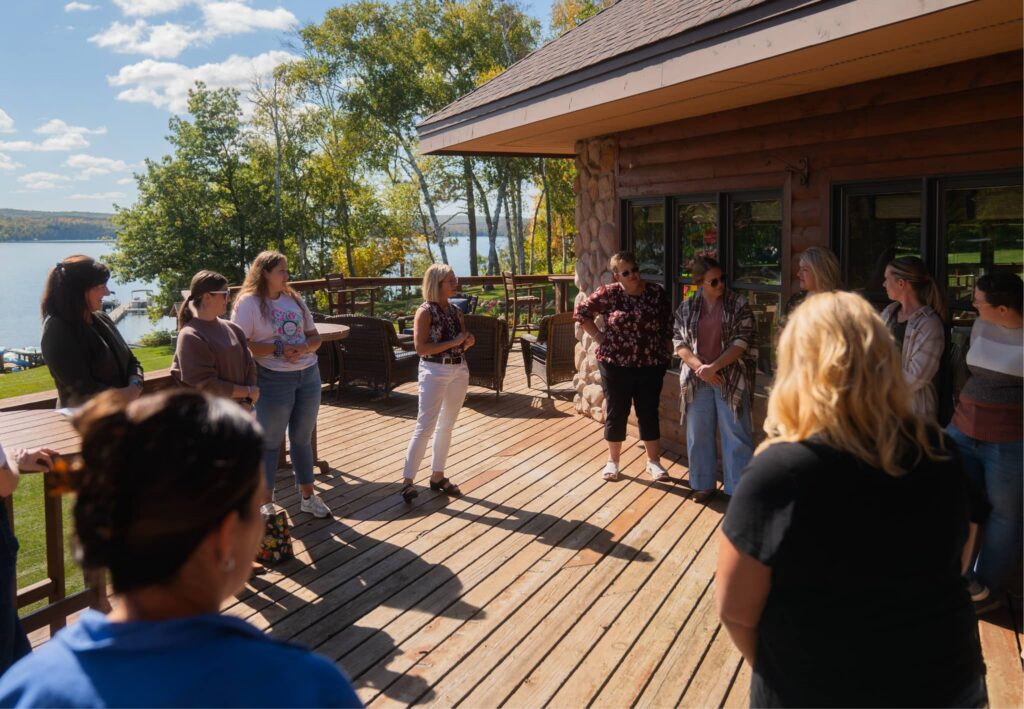
The setting does its part too. Out on the deck, around a campfire, looking across the lake, teams tend to think differently.
Partly because the air is clearer.
Partly because no one has their usual desk to hide behind.
Some of the most useful moments do not happen in the session.
They happen somewhere between the session and the shoreline.
Autumn is a useful teacher.
What is still worth carrying into the next season?
What can you put down?
If your team could use that kind of space, the Leadership Lodge is here when you are ready. Reach out to start planning your next steps.
The trees seem to think the timing is about right.