
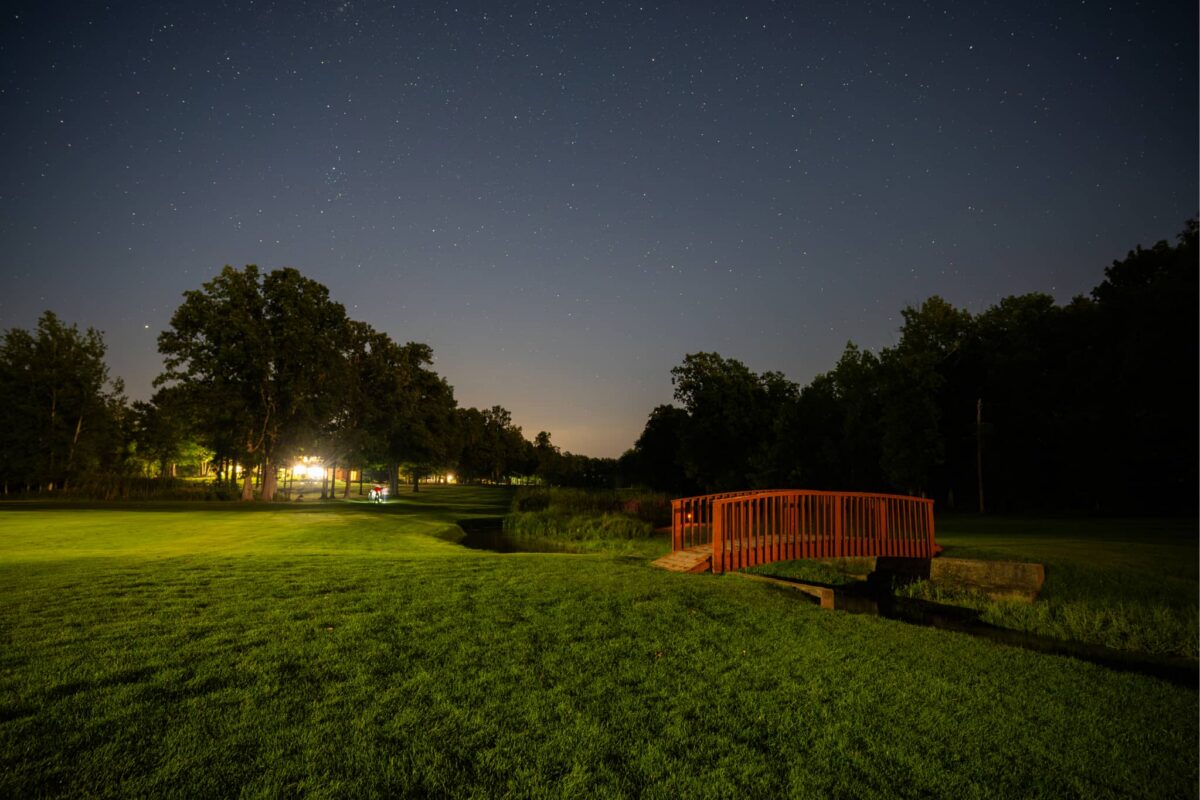
Every August, the sky puts on a show worth staying up for.
Late July through early August, Earth moves through the debris trail of comet Swift-Tuttle. This comet last passed through the inner solar system in 1992. What’s left behind is the Perseid meteor shower: ancient rock burning up miles above the water, visible to the naked eye, and something families tend to remember for a long time.
Dark Skies, Bright Stars
Out of the cities and into the Northwoods at Sugar Lake there is less light pollution. On a clear night you can often see the Milky Way galaxy and plenty of stars not visible in the city. To view the meteor shower all you need is darkness, patience, and the willpower to stay up way past your bedtime.
Sugar Lake delivers on all three.
Why a Paddle Changes the Experience
The dock is good. The water is better.
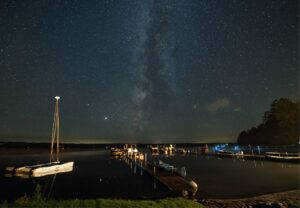
The crystal-clear waters of Sugar Lake mirror the night sky after sunset. From a canoe or kayak, if you paddle out far enough, the stars reflect on the water (so do the Perseids), and this immersive experience might just be the highlight of your summer. In the quiet stillness of late summer nights, the awe takes hold, and looking up at the sky makes even the most seasoned stargazers feel like kids again.
Set an Alarm. Trust Us, It’s Worth It.
The Perseids tend to build as late night deepens into the pre-dawn hours. Ask anyone who’s stayed up for it: 3 to 4 a.m. is the sweet spot. For 2026, the timing couldn’t be better. The new moon lands right at the peak on August 12, with zero lunar light pollution, genuinely black skies, and the kind of conditions where skywatchers report 90 meteors per hour or more.
Some years the moon washes it out. Some years the sky hands you everything. Either way, you show up.
On a paddleboard or in a canoe, you’re not watching the sky through a gap in the trees. You’re inside it. The lake reflects the constellation Perseus rising in the northeast, and from out on the water, that whole sweep of northern sky is yours: open, unobstructed, enormous.
Early evening brings a special kind of meteor: earthgrazers that skim the upper atmosphere and drag long, slow trails across the sky, lasting several glorious seconds before they’re gone. Catch one of those from a kayak and you’ll understand why people set alarms for 3 a.m.
Kayaks, canoes, and paddleboards are included with your stay at no extra cost, no reservation needed. Grab one after dark. Drift out. Let the silence do its thing.
The Peak is Mid-August. Everything Else Is a Bonus
The Perseids are active from mid-July through late August, with the peak falling around August 12. That’s a generous window. Any clear night in that stretch is worth taking seriously, and the nights just before and after the peak can be just as memorable as the peak itself.
When the last light fades and someone suggests a proper star party, you’ll already be exactly where you want to be.
What to Know Before You Head Out
Give your eyes 30 to 40 minutes to adjust before expecting much. A red-filtered light will get you to the dock without wrecking your night vision. Bring more layers than you think you need; summer nights on Sugar Lake cool fast, and the hull of a kayak is not known for its insulating properties.
Point yourself toward the darkest corner of the sky. Look away from the moon when it’s up. Then just wait. Meteor showers are famously unpredictable; you might watch ten quiet minutes and then catch a fireball that makes everyone go quiet.
The People You’re With
Watching the sky do something it’s been doing since long before anyone thought to name it is one thing. But when you experience the awe and wonder of the night sky with those you love the most, that’s when it becomes something more than a night outside.
The shooting stars are pieces of comet burning up at the edge of the atmosphere. Somehow that makes the moment feel vast and hard to explain. And all the more beautiful.
Kids remember this. Parents remember this. The conversation on the way back to shore, paddles dripping, someone still scanning the sky, seeing the orange tail of a comet reflect on the water? Those parts stay.
The Perseids show up every August. The summer your daughter spotted her first fireball, or the night your whole family drifted out on paddleboards and counted streaks until someone fell asleep under the stars, that happens once.
The lake has better sky views than your backyard. Just saying.