
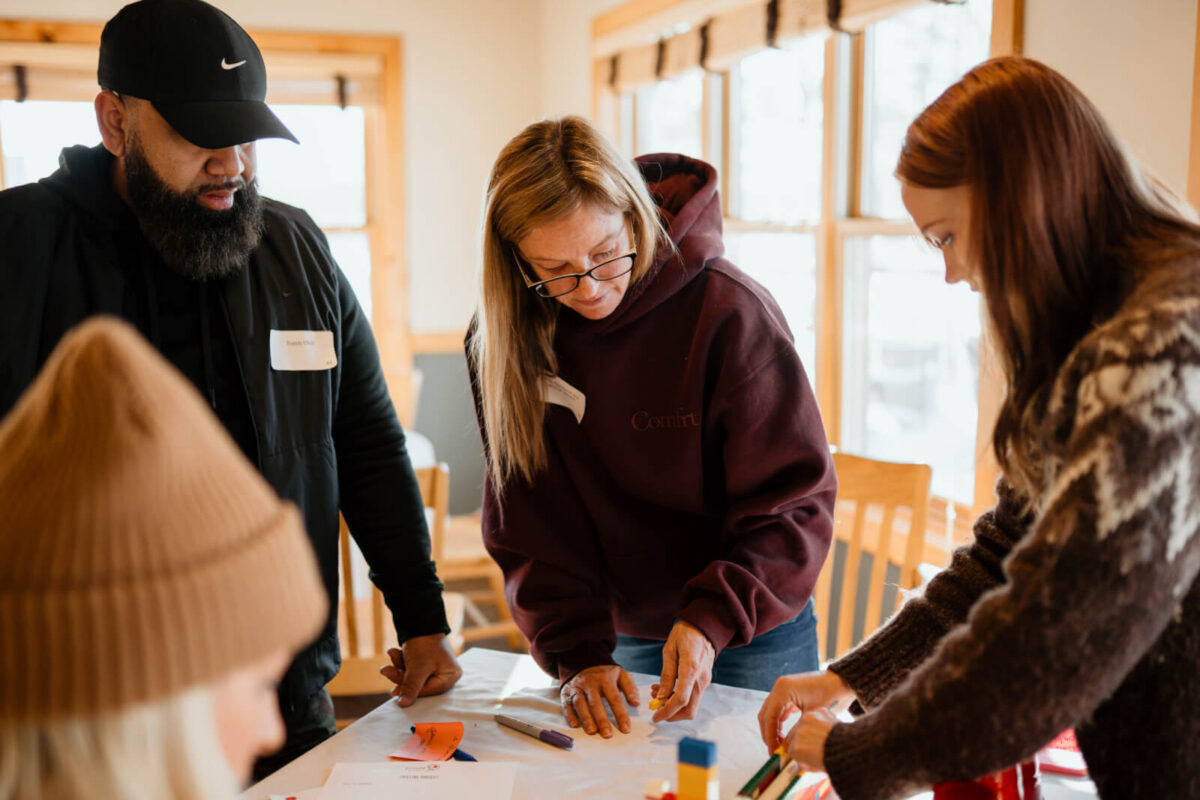
Growth doesn’t tiptoe in. It arrives charged with excitement and challenge, asking leaders to pay attention in new ways. Leaders who handle growth well understand that progress depends less on quick answers and more on how they listen.
In today’s business environment, listening asks for intention beyond physical presence or an open-door policy. Spotting opportunity requires active listening, choosing where attention belongs and even noticing nuanced signals. With so much information competing for focus, strong leaders learn to use their listening energy with intention.
When listening is deliberate, teams respond. Employee input surfaces earlier. Conversations move beyond polite agreement and into collaborative thinking. Team dynamics shift, team coordination improves, and engagement grows as collaboration becomes part of the organizational culture.
Psychological safety rarely emerges under constant urgency. It takes space—physical and mental—where listening can slow down and attention can settle.
Leadership retreats are one way teams step into that kind of environment intentionally.
Psychological Safety and Team Performance
Psychological safety reflects a shared belief that it is safe to speak up, ask questions, and engage in interpersonal risk-taking. In teams where workplace safety is felt emotionally as well as operationally, people test ideas out loud, acknowledge mistakes, and challenge assumptions with care.
Research on organizational behavior consistently links psychological safety to stronger team performance. Teams grounded in trust adapt more quickly, collaborate more effectively, and build resilience under pressure. Leaders who foster this environment treat challenge as useful information. Diverse teams and diverse thinking become advantages that strengthen decisions, deepen inclusion, and improve outcomes.
Creating this level of trust often requires leaders to step outside daily pressures and into shared experiences that allow new patterns of listening and interaction to form.
Psychological safety supports open dialogue by setting the tone for how teams work together. It shapes team culture and allows disagreement to sharpen ideas instead of slowing progress. When teams feel safe sharing honest input—including uncertainty and mistakes—engagement rises. People feel valued, included, and more willing to show up authentically.
Listening as a Leadership Skill
Psychological safety develops through everyday leadership behavior, with listening at its core.
Strong listening skills signal respect and communicate that insight can come from anywhere in the room. Leaders who practice active listening pay attention to body language and non-verbal cues. Tone, pacing, posture, and hesitation act as behavioral signals that often carry as much meaning as what is spoken.
Effective listening techniques move past conversation. They show up in how leaders design communication channels, invite performance feedback, and create space for team debriefing. With practice, listening becomes a reflective habit that strengthens trust and inclusion across leadership teams.
These skills develop in environments designed for reflection, where leaders can practice listening together without the pull of immediate demands.
When people feel heard, collaboration improves. Listening transforms participation into partnership.
Psychological Safety in Action
The impact of psychological safety shows up in real results. Studies of high-performing teams point to a consistent pattern of people who feel comfortable speaking up. When trust is present, information moves freely, ideas are tested early, and decisions improve before problems escalate.
Other research reinforces the same insight. Teams with strong psychological safety experience higher performance and lower friction. When people trust the environment, they ask better questions, take thoughtful risks, and learn openly from mistakes.
Without that sense of safety, great ideas stay in people’s heads, engagement fades, and issues hang around longer than they should.
When the Thaw Begins
In nature, the spring thaw arrives on its own timeline. Ice loosens its hold, water begins to shift beneath the surface, and change takes shape before it’s visible. Teams move the same way.
When leaders create space for listening, tension eases and conversations deepen. Trust builds steadily. Psychological safety takes hold through presence and attention. Creativity returns, and movement becomes smoother and more aligned.
Away from constant urgency, leaders have time to notice and listen. The natural space at Sugar Lake Lodge helps leaders relax into the rhythm of the season where nothing feels rushed. In this setting, leadership teams listen differently.
The pace and shared experience create conditions where psychological safety can take hold.
Team dynamics soften, inclusion feels more natural, and people hear one another more clearly. The thaw begins.
Listening as a Leadership Practice
Listening functions as a core leadership skill. It requires presence and openness, creating room for challenge, dissent, and a full range of perspectives to inform the work.
When leaders invest in listening through shared dialogue in intentional environments, psychological safety grows. Teams speak with candor, learning accelerates, and collaboration sharpens ideas. Challenge stays in the room, and teams move through it together.
Explore leadership retreats designed to create space for listening, trust, and psychological safety.
Ready to Plan Your Next Retreat? Start Planning Today